
If you spend any time scrolling through Facebook or TikTok in the winter, you’ve probably seen them–those viral “monster snowstorm” posts with maps showing northwest Indiana buried under two feet of snow ten days from now. They rack up thousands of shares, hundreds of comments, and a whole lot of confusion. And for your Region Weather meteorologist, they also create a bit of a headache.
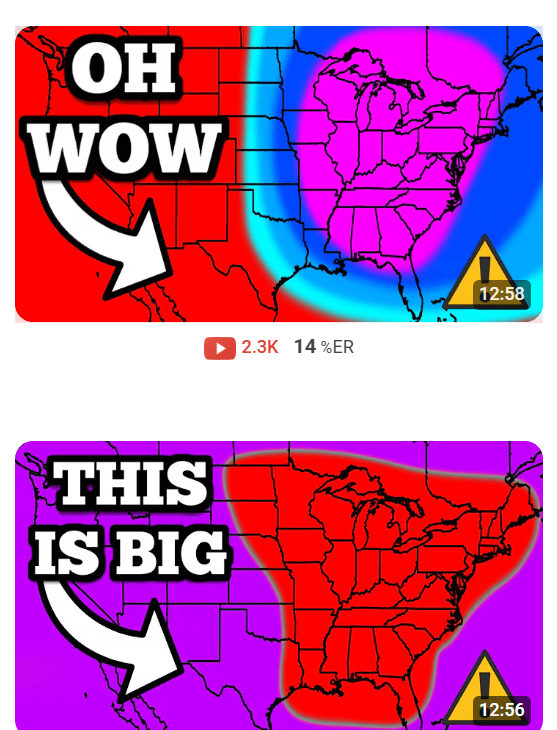
Let’s talk about why these “hype” pages keep popping up, what they get wrong, and why it still matters — maybe more than ever — to trust actual meteorologists for your weather info.
The Rise of the Hype Pages
Social media has changed how we consume weather. Anyone with a computer can now grab a model run, color it bright purple, and post “HISTORIC SNOWSTORM POSSIBLE NEXT WEEK”
It looks official. It feels urgent. But it’s often based on one computer model run — not an actual forecast.
These pages thrive on engagement, not accuracy. They want clicks, comments, and shares — not necessarily to help you plan your commute or protect your pipes. In other words, the algorithms reward attention, not truth.

What Meteorologists Actually Do
Here’s the key difference:
Meteorologists interpret the data.
We don’t just look at one model — we look at dozens, plus historical patterns, upper-air soundings, lake temperatures, jet stream placement, and ensemble spreads (basically, multiple “what if” scenarios).
Then we build a forecast that balances uncertainty, timing, and impact.
So while a hype page might show you a dramatic snow map for Indiana 10 days out, a meteorologist will tell you:
“There’s potential for a storm next weekend, but the track and timing are still uncertain — it could miss us entirely.”
That might not go viral, but it’s responsible forecasting.
Why Early “Storm Warnings” Cause Problems
You might think it’s harmless — just a bit of buzz about weather. But hype forecasts can cause real-world issues:
- Confusion: People don’t know which forecast to trust.
- Misinformation: Businesses and schools might act on false information.
- Forecast fatigue: When hype storms fizzle, the public starts ignoring real warnings later.
- Erosion of trust: It makes all weather forecasts look unreliable — even the accurate ones.
Meteorologists work hard to build that trust. Every time an overblown 10-day-out “snowmageddon” fails to happen, that trust takes a hit.
The Reality of Forecasting
Here’s the truth: weather models are incredible tools, but they’re not crystal balls.
Beyond about 5–7 days, uncertainty grows quickly — tiny shifts in storm tracks or temperature profiles can completely change outcomes. A storm that looks like a foot of snow can end up being rain or flurries.
That’s why professional meteorologists always emphasize ranges, probabilities, and confidence levels instead of certainties. It’s not “boring” — it’s science.
How to Spot a Reliable Weather Source
Before sharing or reacting to the next “historic storm” post, check for these signs:
 Source credentials — Is the person posting an actual meteorologist? (Look for AMS seals, NWA membership, or broadcast station credentials.) Time frame — Is it predicting something more than a week out? (That’s a red flag.) Tone — Does it sound like a forecast or like clickbait? (“You won’t believe what’s coming!!” = clickbait.) Local context — Real meteorologists tailor forecasts to your area — not generic maps pulled from a national model.Updates — True weather pros update frequently and admit when forecasts change. Hype pages often disappear when they’re wrong.
Why You Should Trust Meteorologists
Meteorologists are trained scientists who live and work in your community. They know your roads, your neighborhoods, your lake-effect quirks, your commutes.
They’re not chasing clicks — they’re trying to keep people safe and informed.
They’ll never tell you a forecast is certain when it isn’t — and that honesty is exactly what makes them trustworthy.
So next time you see a “snowpocalypse” map making the rounds online, take a breath. Check with us here at Region Weather for the latest, non-hyped forecast. We’ve kept it this way for 10 years.
Final Thought
Weather hype may get the clicks, but truthful forecasting is what gets you safely through the storm.
Support your local meteorologists.
They’re not fighting the weather — they’re fighting misinformation.
 Region Weather